

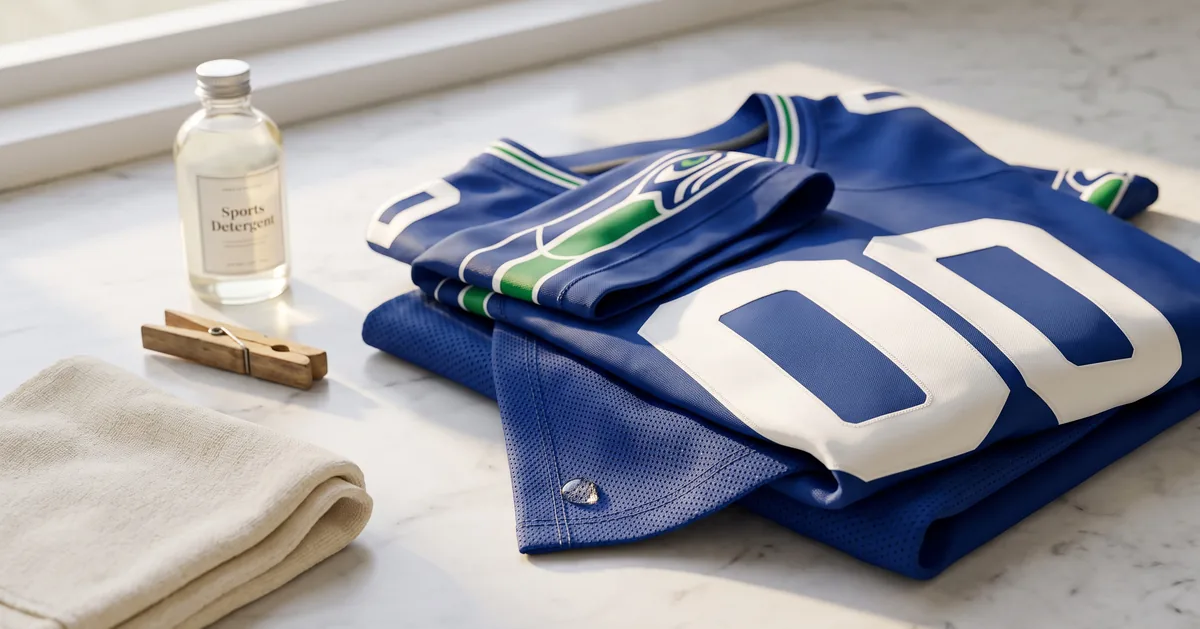
How to Wash a Jersey Without Wrecking Numbers
Nothing Ruins a Jersey Faster Than One Wash Done Wrong
You spent weeks choosing the jersey. The last thing you want is peeling numbers after two months — but that's exactly what happens to jerseys that go through a normal household wash on default settings.
The fix takes ten extra minutes. Here's the method, learned from a lot of ruined jerseys (so yours don't have to be).
The 60-Second Version
Inside Out — Always
Before the jersey goes anywhere near water, flip it. The graphics go in, the plain fabric takes the abuse.
Cold Water, Gentle Cycle, Mild Detergent
No bleach. No fabric softener. Both quietly destroy jersey graphics over time.
Wash It Alone or With Similar Colors
Never with towels, jeans, or anything with hooks or zippers that can catch printed numbers.
Air Dry — Flat or on a Hanger
The dryer is where jerseys go to die. A plastic hanger overnight does the job.
That's it. Do that and your jersey outlasts the player's contract.
Why Each Step Matters
Inside out
The printed or stitched graphics on the back take the most abuse during a wash cycle — agitation, friction against the drum, other clothes dragging across them. Flipping the jersey inside out puts the fabric side out and the graphics safely in.
Cold water
Hot water is the number-one killer of jersey color. NFL and soccer jerseys use dye-sublimated or printed graphics that tolerate cold perfectly but slowly degrade with heat. Cold water also protects the stretch fibers that make jerseys comfortable.
No fabric softener — seriously
Fabric softener leaves a coating that dulls prints over time and can interfere with the adhesion of screen-printed numbers. If the jersey feels stiff after washing, that's normal — it softens within minutes of wearing.
Never the dryer
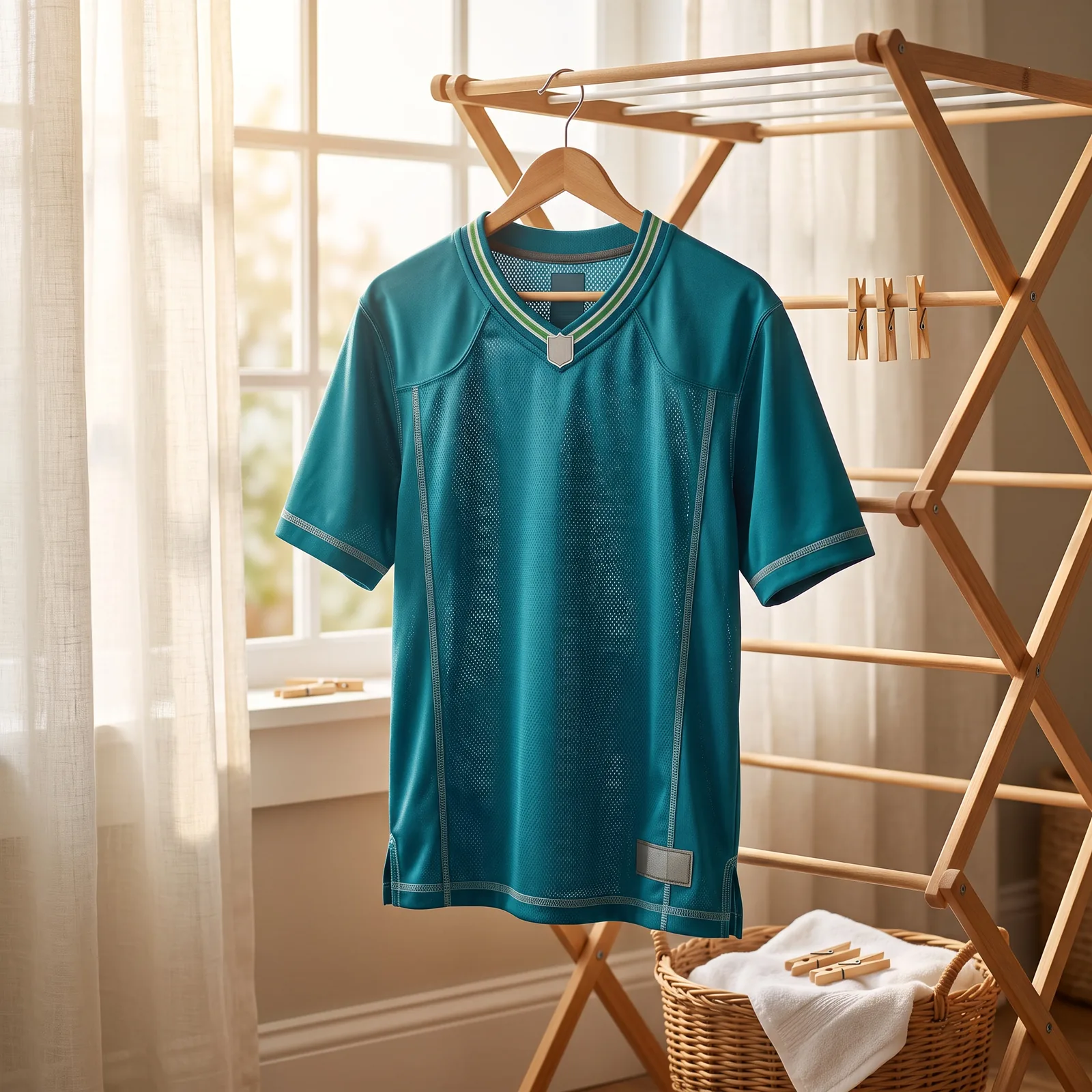
High heat is the single fastest way to crack printed numbers and warp stitched twill. Even "low heat" settings creep up on older dryers. Hang the jersey on a plastic hanger (wire hangers can leave rust marks and shoulder dimples) and let it dry overnight.
Stain Emergencies: Tailgate Edition
Game day happens. Mustard, beer, wing sauce — the classics. The rules for stains:
- Act fast, blot don't rub. Rubbing works the stain into the fibers and abrades the print above it.
- Cold water rinse from the inside of the stain out — pushing the stain back out the way it came in, not deeper.
- Mild dish soap or a dedicated stain stick on the spot, 10 minutes, then a cold gentle wash.
- Never hot water on a fresh stain — heat sets protein stains (blood, sweat, wing sauce) permanently.
Storage That Doesn't Ruin Stitching
Between seasons, hang jerseys rather than folding them — folded twill numbers can crease permanently along the fold line. If you must fold them (moving house, drawer storage), fold around the numbers rather than across them, and keep them out of direct sunlight, which fades colors unevenly. A closet with a closed door beats a wall hook next to a window.
When a Number Starts Peeling Anyway
It happens, especially on older screen-printed Game jerseys. Two options: place a sheet of parchment paper over the graphic and iron on low with no steam, pressing (not sliding) for a few seconds at a time — or retire that jersey to chores duty and treat yourself to a new one. A custom jersey with your own name on it softens the blow nicely.
The Whole Care Routine on One Card
The four steps above cover wash day. This table covers everything either side of it — what the jersey shares the load with, what to do in the ten minutes after a wing-sauce disaster, and where it lives between seasons — in the do-this / never-this form that is easiest to follow with the machine already open.
On a phone, swipe the table sideways; all four columns scroll.
Jersey care at a glance — do this, never this, and the reason why
| Step | Do this | Never this | Why it matters |
|---|---|---|---|
| Before it goes in | Turn it inside out — graphics in, plain fabric out | Wash it right-side out | The back graphics take the most agitation and friction; flipping the jersey is the single easiest thing you can do to extend its life |
| Water and detergent | Cold water, gentle cycle, mild detergent | Bleach and fabric softener — both of them, every time | Hot water is the number-one killer of jersey colour and damages the stretch fibres; softener leaves a coating that dulls prints and interferes with screen-print adhesion |
| What shares the load | Wash it alone, or with similar colours | Towels, jeans, or anything with hooks or zippers | Hooks and zippers catch printed numbers and drag across them through the cycle |
| Drying | Air dry flat or on a plastic hanger — overnight is enough | The dryer, on any setting; and skip wire hangers | High heat cracks printed numbers and warps stitched twill, and even low heat creeps up on older dryers. Wire hangers can leave rust marks and shoulder dimples |
| A fresh stain | Blot rather than rub, rinse cold from the inside of the stain out, then mild dish soap or a stain stick for ten minutes and a cold gentle wash | Hot water on a fresh stain, and rubbing at it | Heat sets protein stains like blood, sweat and wing sauce permanently; rubbing works the stain deeper into the fibres and abrades the print above it |
| Numbers that peel | Cover the graphic with parchment paper and iron on low with no steam, pressing rather than sliding, a few seconds at a time | Slide the iron across the graphic | This buys time on older screen-printed Game jerseys; the permanent answer is stitched twill, which cannot peel |
| Between seasons | Hang it; if you must fold, fold around the numbers, and keep it out of direct sunlight | A wall hook beside a window, or a fold running across the twill | Folded twill numbers can crease permanently along the fold line, and sunlight fades colours unevenly |
Can I wash my jersey with the rest of the laundry?
Not with the heavy stuff. Wash it alone or with similar colours, and keep it away from towels, jeans and anything with hooks or zippers — those are what catch printed numbers and drag across them through a full cycle. It is the least obvious of the four rules and the one that costs people their graphics, because a jersey thrown in with a normal dark load looks fine right up until the numbers start to lift.
How should I store a jersey between seasons?
On a hanger, in a closed closet, out of the sun. Hanging beats folding because folded twill numbers can crease permanently along the fold line, and direct sunlight fades colours unevenly — which is why a closet with a closed door is better than a wall hook next to a window. If drawer or moving-box storage is unavoidable, fold around the numbers rather than across them.