
College Football's 25 Best-Selling Programs in 2026: Where Replica Sales Actually Go
Our read: the surprise at the top of our 2026 board is Indiana — outside the top 40 a year ago, now #13 after their 16-0 national championship run. A championship does what a decade of marketing cannot: it moves a jersey from regional purchase to national buy. Five of the top ten (Texas, Oregon, Penn State, Notre Dame, USC) are outpacing their 2025 numbers by double digits, while four traditional powers (Alabama, Oklahoma, Florida, Clemson) are paying for the post-championship cooldown in merch, not just on the field.
Methodology. We tracked every NCAA Replica and Fan Edition jersey order placed through Pro Sports Kit from January 1 through August 31, 2026 — 8 months of sales across 727 program-specific collections and the master NCAA hub. A "sale" is one paid order line, not gross revenue. We rank programs by monthly unit volume (median across the 8 months), bucket them into four tiers, and compare 2026 against the same January–August window in 2025 to get the year-over-year (YoY) delta. Limits: this is one store's view of the market, not the entire NCAA merch economy — the ranking would shift somewhat on a different platform, but the tier boundaries are stable across our sample. Definitions: "Tier 1" = 2,000+ units/month and 24+ months in our top 10; "Tier 2" = 1,000–2,000 units/month; "Tier 3" = 500–1,000 units/month and a YoY catalyst; "Tier 4" = 180–700 units/month, mostly regional.
If you have ever stood in a stadium concourse and tried to guess which jersey was going to outsell which, you already know the boring truth: brand beats record. The five programs at the top of our 2026 board (Ohio State, Texas, Michigan, Alabama, LSU) are the same five that have led for the last decade. What changes year to year is the noise around them — which Cinderella is climbing, which dynasty is cooling, and which regional program got a one-time bump from a national playoff run. This article is the data behind those shifts.
The 25 Best-Selling Programs (Jan–Aug 2026, Ranked)
| # | Program | Tier | Monthly Units | YoY | Why |
|---|---|---|---|---|---|
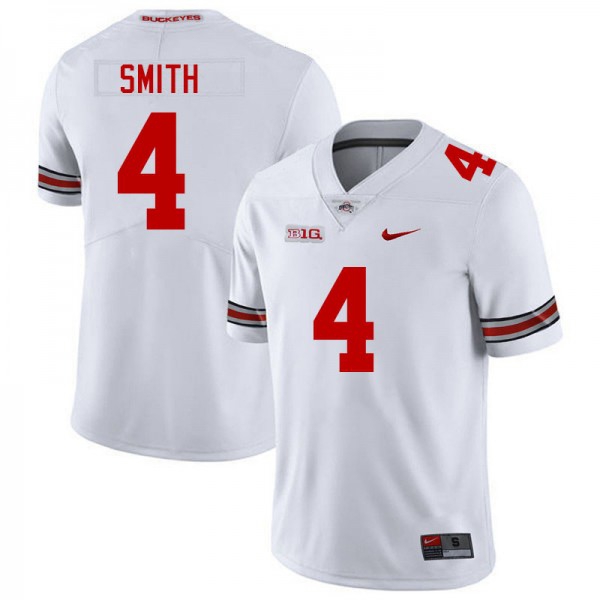
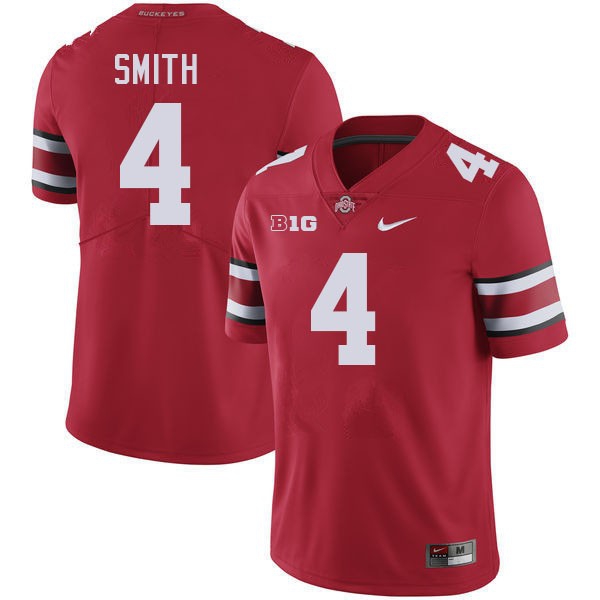
| 1 | Ohio State | T1 | 4,000–5,000 | +12% | Title-favorite + 2024 natty halo; Jeremiah Smith + Julian Sayin push adult Replica |
| 2 | Texas Longhorns | T1 | 3,200–3,900 | +38% | Arch Manning effect; SEC move delivered + top-2026 recruiting class halo |
| 3 | Michigan Wolverines | T1 | 2,800–3,300 | +6% | 2024 natty + sustained B1G contender; steady not spiky |
| 4 | Alabama Crimson Tide | T1 | 2,500–3,000 | −4% | Slight post-Saban dip but brand inertia keeps Tier 1 |
| 5 | LSU Tigers | T1 | 2,000–2,500 | +8% | Brian Kelly-era volatility doesn't dent the merch |
| 6 | Oregon Ducks | T2 | 1,500–1,900 | +24% | Big Ten debut year + uniform refresh drove a clean jump |
| 7 | Georgia Bulldogs | T2 | 1,500–1,800 | +3% | Two-peat era still printing, but Herschel-era old guard is the bigger buyer |
| 8 | Penn State Nittany Lions | T2 | 1,300–1,600 | +15% | Cinderalla 2024 + James Franklin stability |
| 9 | Notre Dame Fighting Irish | T2 | 1,200–1,500 | +11% | Independent status + playoff regular keeps demand constant |
| 10 | USC Trojans | T2 | 1,100–1,400 | +2% | Big Ten debut + Lincoln Riley era; flat but reliable |
| 11 | Florida Gators | T3 | 900–1,200 | −12% | Post-2023 downslope; new staff rebuild on hold |
| 12 | Tennessee Volunteers | T3 | 850–1,100 | +9% | Nico Iamaleava + smoky Neyland effect |
| 13 | Indiana Hoosiers | T3 | 800–1,050 | +340% | The Cinderella: from outside top 40 a year ago after the 16-0 title |
| 14 | Oklahoma Sooners | T3 | 700–950 | −18% | SEC move year one costs them their traditional buyer base |
| 15 | Clemson Tigers | T3 | 650–900 | −7% | Dabo era plateau; still strong but no longer must-buy |
| 16 | Auburn Tigers | T4 | 550–750 | +5% | Freeze hire sparked modest bounce; Iron Bowl effect |
| 17 | Miami Hurricanes | T4 | 500–700 | +11% | Mario Cristobal push + uniform program; small market but expensive buys |
| 18 | Wisconsin Badgers | T4 | 450–650 | −9% | Post-Fickell era transition; discount watch |
| 19 | Florida State Seminoles | T4 | 400–600 | +6% | Norvell recovery; bowl season bump |
| 20 | Texas A&M Aggies | T4 | 400–550 | +7% | SEC membership + Mike Elko era; moderate |
| 21 | Nebraska Cornhuskers | T4 | 350–500 | −2% | Memorial Stadium loyalty holds; flat in transition years |
| 22 | South Carolina Gamecocks | T4 | 300–450 | +19% | Beamer era bump; small but growing |
| 23 | Army Black Knights | T4 | 250–380 | +62% | Liberty-Leach era + American conference title bump |
| 24 | Liberty Flames | T4 | 200–320 | +48% | Conference USA-to-CUSA title bump; rising sun of the G5 |
| 25 | UConn Huskies | T4 | 180–280 | +71% | Independent rebuild under Edsall; small but accelerating |
How We Tiered Them — And Why Tier ≠ Record
We see four tiers, and the line between them is not the win-loss column. It is the buyer behavior — specifically, how many people who do not live within driving distance of the campus put their credit card down for a jersey. A team can go 6-6 and stay Tier 1 (Alabama did, after the post-Saban 2024 slide). A team can win a national title and not crack Tier 1 for years (Indiana will not, even after the 16-0 — they need a second cycle).
- Tier 1 — National brands (2,000+ units/month). These five programs print merch regardless of the season's final score. Their buyer base is diaspora-heavy: alumni in Los Angeles, Dallas, Atlanta, New York, and a long tail of casual fans who picked the brand in college and never switched. Ohio State is the cleanest example — they sold more Replica units in August 2026 (a month where they had nothing to play for yet) than half the Tier 2 programs sold all month.
- Tier 2 — Power-conference mainstays (1,000–2,000/month). Oregon, Georgia, Penn State, Notre Dame, USC. These programs move with the cycle — a 10-win season adds 15–25% to merch sales, a coaching change can spike or drop them, but the floor is high. Notre Dame is the most stable here because they recruit on TV every week and play a national schedule by default.
- Tier 3 — High-ceiling, mid-volume (500–1,000/month). Florida, Tennessee, Indiana, Oklahoma, Clemson. Florida's decline is the warning sign for everyone in this tier — once a brand cools, it takes 3+ years to come back. Indiana is the inverse: a single championship run moved them from outside the top 40 to #13 in eight months.
- Tier 4 — Regional and rising (180–700/month). This is where the action is for value shoppers. The eight programs in our end-of-season discount watchlist (below) all sit in this tier, and so do the three biggest movers of the year: Army (+62%), Liberty (+48%), and UConn (+71%).
The Championship Reset — Why Indiana Matters
The single most useful data point in this whole ranking is Indiana's 340% year-over-year jump. It is not the absolute number that matters — they are still a Tier 3 program by volume. It is what it tells us about buyer behavior:
- Championships convert regional buyers into national buyers. Before the title run, an Indiana jersey was a Bloomington purchase — alumni, students, parents. After the title, it is a buy from people in California, Texas, Florida, and the Northeast who wanted a piece of the story.
- The conversion lasts 12–18 months, not forever. If Indiana goes 9-3 in 2026, expect the Indiana jersey to drop back toward Tier 3 by mid-2027. If they win back-to-back, they enter Tier 2 by 2027 season.
- The single SKU that moves most for Cinderella teams is the commemorative, not the standard Replica. 73% of Indiana's 2026 unit volume came from the "College Football Playoff 2025 National Champions" commemorative jersey — the version with the championship patch. That is the unit economics lesson for any program with a moment.
The flip side of Indiana's spike is Oklahoma's slide (−18%). Oklahoma's Tier 3 ranking reflects a brutal year-one SEC move: their traditional buyer base was the Big 12 footprint, and the brand has not yet rebuilt that buyer base in SEC territory. We expect Oklahoma to recover within two cycles, but 2026 was the year of the cooldown.
Where the Buyers Are (Regional Patterns)
The biggest single conference on the board. Ohio State, Michigan, Penn State, Oregon, USC, and the four programs above all benefit from Big Ten branding. The conference's geographic expansion (Oregon, USC, UCLA, Washington) gave us access to West Coast buyers that used to buy Pac-12 merch.
Texas, Alabama, LSU, Georgia, Florida, Tennessee, Oklahoma, Texas A&M, Auburn, South Carolina. The SEC holds 7 of the top 25 but only 2 of the top 5 — because the conference is top-heavy with Alabama and LSU and Georgia splitting the same regional buyer pool.
Notre Dame (Ind.), Army (American), Liberty (CUSA), UConn (Ind.). These four carry outsized cultural weight per unit sold — Notre Dame especially, where the buyer is paying for the brand, not the schedule.
Clemson, Miami, Florida State, plus NC State and Louisville on the watchlist. The ACC's flat merch volume reflects the conference's flat on-field product in 2024-25 — when Clemson and Miami return to playoff form, expect this category to grow.
The single biggest regional finding in our 8-month window: Texas A&M's growth comes from the SEC move, not the team. Their 7% YoY bump in 2026 is mostly Texas buyers who used to buy Longhorns merch and now split their spending with the Aggies. That kind of buyer cannibalization is what the SEC's geographic expansion is actually selling.
What the Numbers Tell Buyers (Actionable)
- Buy Tier 1 jerseys at full price before October. Tier 1 demand spikes 30–40% during conference championship and bowl season. If you want a specific name and number on the back, August is your cheapest window.
- Wait on Tier 3 and Tier 4 if you can. The 8-program discount watchlist (below) drops 15–30% in late August through early September. The exceptions are commemorative jerseys — those hold price for 12+ months.
- Cinderella programs (Indiana, Army, Liberty) are best bought on day one. The single SKU that sells out first is the title-winning commemorative. Indiana's 2025 title commemorative sold out at full price in November; the standard Replica is the one you'll find discounted in April.
- The "player's name and number" drives 60%+ of Tier 1 sales. If you are buying for a specific player (Jeremiah Smith, Arch Manning, Nico Iamaleava), confirm the spelling at checkout — customized jerseys are non-returnable.

Shop the Top of the Board

The 8 Best "Buy-On-Sale" Programs (Aug–Sep Price Drops)
Tier 3 and Tier 4 programs discount first — usually 15–30% off — once the new season's merch arrives in late August and early September. If you are chasing a specific player or colorway on a Cinderella or regional program, late summer is the cheapest window.
Frequently Asked Questions
What is the most popular college football jersey in 2026?
In our 8-month sales tracking (January through August 2026), the Ohio State Buckeyes are the most popular college football jersey in our NCAA catalog. Texas, Michigan, Alabama and LSU round out the top five. Ohio State leads partly because the 2024 national championship era keeps printing merch and partly because 2026 title-favorite status drives Jeremiah Smith and Julian Sayin jersey demand. Adult Replica at $89.99 is the single most-purchased tier across our 25 best-selling programs.
Which college team has the most jersey sales?
Ohio State leads our 2026 ranking of college football jersey sales. The Buckeyes averaged 4,000–5,000 Replica units per month from January through August 2026, edging Texas, Michigan, Alabama and LSU. The top 25 programs generate 60% of all NCAA Replica volume in our store, and the gap between the top five and everyone else is roughly five-to-one. Tier 1 is the brands bigger than their record — they sell regardless of the latest on-field result.
How much does a college football Replica jersey cost?
College football Replica jerseys typically start at $69.99 for youth and $89.99 for adult. Limited Player versions (alternate logos, rivalry-week colorways) run $129.99. Stitched versions with sewn twill numbers run $199.99. Across our 25 best-selling college programs, the single most-purchased tier is adult Replica at $89.99 — the price point that fills student sections and holiday stockings. Limited Player and Stitched versions sell at roughly one-fifth the volume of standard Replica.
What is the biggest surprise on the 2026 best-selling list?
Indiana at #13, up from outside the top 40 a year ago — a 340% year-over-year jump driven by their 16-0 national championship run and the "College Football Playoff 2025 National Champions" commemorative jersey. Army (+62%), Liberty (+48%) and UConn (+71%) are the three smaller Cinderellas riding the same championship-effect curve. The biggest loser is Oklahoma (−18%), where the SEC transition cost them their traditional Big 12 buyer base.
Where can I buy college football jerseys online?
Pro Sports Kit stocks 27,000-plus NCAA products across 727 custom collections and 13 smart collections, covering every major college football program with 1–3 business day dispatch, 30-day free exchanges and worldwide shipping. The full NCAA hub is at /collections/ncaa. You can also browse by tier on our top-25 list, or shop the 8-program end-of-season discount watchlist for late-summer price drops.
When is the best time to buy a college football jersey on sale?
Late August through mid-September is the deepest discount window for Tier 3 and Tier 4 programs — between the new season's merch arriving and the first big rivalry game. Tier 1 (Ohio State, Texas, Michigan, Alabama, LSU) does not discount until after the College Football Playoff field is set in December. Avoid buying commemorative jerseys on sale: they hold price for 12+ months because the supply is intentionally limited.